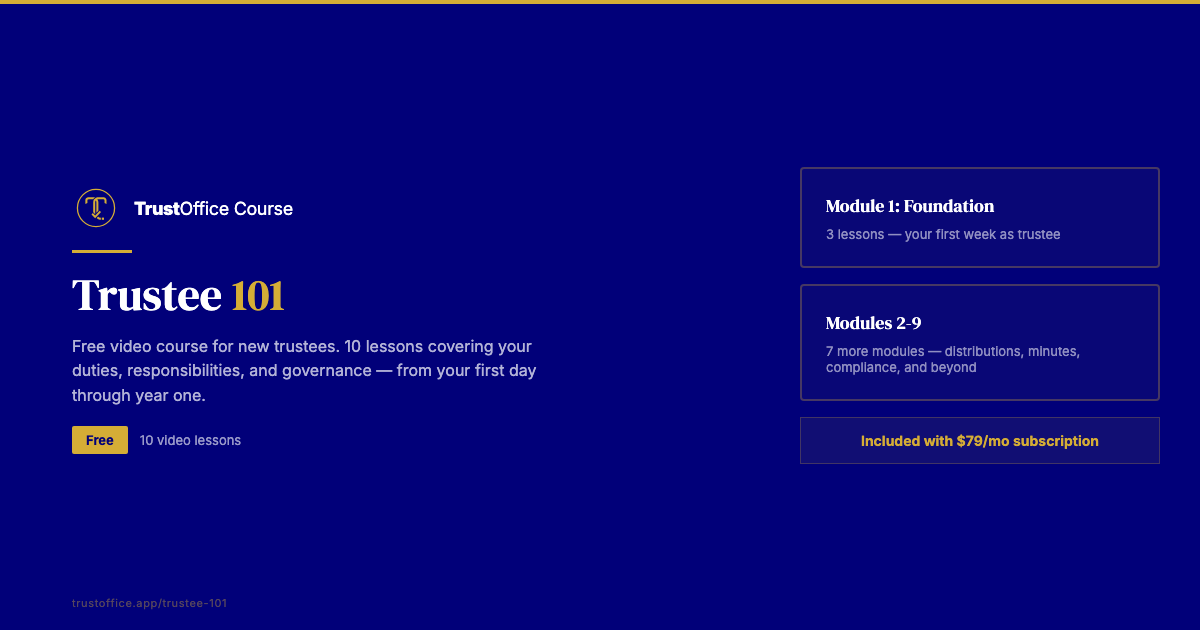
How Free Trustee Course Helps Strengthen Governance Skills
Get started in a Unpaid Fiduciary Professional Workshop to Elevate Your Proficiencies Right Now
Enrolling in a free trustee course can significantly improve one's career competencies. It delivers crucial information on fiduciary duties and financial management. Participants can learn at their own speed while connecting with sector experts. This chance not only enriches understanding but also creates pathways to professional growth. However, many may wonder what particular competencies they can expect to acquire and how these can be utilized in real-world scenarios.

Core Strengths You'll Achieve From a Free Trustee Course
A complimentary trustee course equips participants with fundamental knowledge vital for sound management and management. The curriculum typically covers key topics such as financial education, enabling trustees to comprehend budgets, financial statements, and investment approaches. Participants also gain insights into regulatory obligations, ensuring compliance with laws and ethical standards.
Furthermore, the program strengthens tactical planning skills, preparing individuals to contribute to extended organizational objectives. Strong communication abilities are another important element, enabling trustees to articulate ideas distinctly and interact with stakeholders successfully.
Furthermore, teamwork and leadership skills are stressed, fostering collaboration among board members and promoting a constructive decision-making process. Conflict resolution techniques are also taught, equipping participants to navigate disagreements with professionalism.
In the end, these skills not only prepare individuals for their positions as trustees but also strengthen their overall management abilities, making them important contributors to any organization.
Top Benefits to copyright for a Free Trustee Program for Professional Growth
While numerous professionals look for methods to enhance their careers, taking a free trustee course offers distinctive benefits that can significantly enhance one's trajectory. First, these programs deliver essential information about trustee obligations, enhancing a professional's reputation in their field. Understanding the ethical and legal obligations of a trustee can open up additional career opportunities and responsibilities.
Furthermore, engaging with industry professionals and peers during these courses can produce strong connections that may facilitate career growth. Participants also develop hands-on expertise in financial management and governance, which are increasingly sought after in various sectors. Finally, the flexibility of online formats allows individuals to learn at their own speed, making it simpler to manage education with existing work commitments. Overall, signing up for a free trustee course not only expands knowledge but can also greatly enhance professional prospects and career growth.
Uncovering the Greatest Free Trustee Training for You
How might one discover the most appropriate free trustee course from the numerous options accessible? First, individuals must assess their distinct goals and vocational aims, identifying what competencies or learning gaps they intend to cover. Next, investigating curriculum and design is vital; a well-defined copyright can suggest whether the course will meet one's expectations.
Additionally, considering the credentials of the instructors can deliver perspective into the quality of learning provided. Testimonials and reviews from past students are invaluable, as they reflect genuine experiences and results.
Finally, copyrightining the adaptability of the course structure—whether it is self-paced or scheduled—can assist in selecting a program that suits one's lifestyle. By considering these elements, people can make a more educated choice, ensuring the chosen course matches their career goals and educational preferences.
Powerful Tools for Increasing Your Trustee Course Training
To get the most out of the benefits of a trustee course, a strategic approach is needed. Participants must start by setting clear goals and identifying the particular skills or knowledge they want to gain. Active engagement in the learning process is vital; this involves joining discussions, asking questions, and working together with peers. Consistently reviewing course content supports better understanding and retention of key concepts.
Moreover, it is helpful to document information and create summaries of key subjects, enabling easier review afterward. Connecting with fellow participants can offer useful perspectives and assistance, fostering a sense of community. Utilizing supplementary resources, such as suggested texts or web-based discussions, can improve comprehension and application of acquired knowledge.
Ultimately, putting knowledge into practice in applied situations, whether through simulations or hands-on experience, solidifies comprehension and enhances confidence in trustee responsibilities. By executing these techniques, individuals can maximize their trustee course program for personal and professional growth.
Tangible Uses of Trustee Knowledge in Governance
Trustee abilities are vital in effective governance, enabling individuals to traverse intricate institutional environments. These competencies are essential for fostering openness, responsibility, and principled choices within various entities, including nonprofits, educational institutions, and corporate boards. Trustees equipped with robust analytical capabilities can assess organizational performance, fiscal well-being, and adherence to regulatory standards, thus improving comprehensive organizational leadership.
Moreover, strong communication abilities allow trustees to engage with stakeholders, ensuring that multiple viewpoints are recognized in decision-making processes. Conflict resolution competencies are just as vital, as they support preserve harmony and cooperation among board members and other stakeholders. Additionally, forward-thinking planning abilities allow trustees to coordinate organizational goals with wider purposes, guaranteeing endurance and growth. In this way, the application of trustee skills in governance strengthens institutional frameworks but also cultivates trust and integrity within communities and organizations.
Commonly Posed Questions
Do Industry Associations Accept No-cost Fiduciary Courses?
Complimentary trustee courses may not necessarily be validated by professional organizations. Approval often is determined by the training provider and the particular accrediting agency, so individuals should verify credentials before take the first step enrolling in any training.
How Much Time Will a Standard Free Trustee Course Require to Conclude?
A regular free trustee offering generally takes between four to eight weeks to complete. Course span may shift depending on the vendor, subject depth, and participant engagement, allowing for flexibility in learning schedules.
Can I Receive a Certificate After Finishing a Free Trustee Course?
Yes, attendees can generally get a diploma after finishing a free trustee course. However, certification availability may differ by provider, so individuals should confirm the specific details with the course organization before enrolling.
Are there Caps to How Many Fiduciary Courses I'm Able to Register For?
Typically, there is no restriction to how many trustee courses a person can enroll in. People are encouraged to take multiple courses for expanding their knowledge and skills in trustee roles and oversight.
What Requirements Are Essential to Participate in a Free Trustee Course?
To enroll in a free trustee program, individuals typically need a fundamental knowledge of finance basics, dedication to the program length, and sometimes prior experience in fiduciary roles. Particular prerequisites may differ by institution.